The older part of the inn, which stands on a granite plinth, is part timber-framed and thatched and is said to date from 1475. No proof exists so far, but it has been suggested that it may once have been a barn belonging to Littlethorpe House Farm, opposite.
One thing is certain: it has been part of village life as a public house for at least three centuries. Over that time it has hosted coroners’ inquests, numerous auction sales of local land, property and goods, village flower, fruit and vegetable shows, as well as all the other usual pub activities.
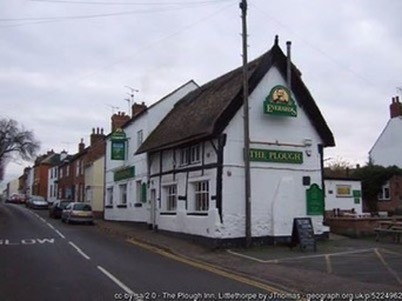
The Plough Inn late 20th century
The Lost Three-Storey Building
Although nobody in living memory can recall it, but there was once a three-storey building attached to the thatched part of the pub (see picture). Looking closely, this building had painted on its front wall a large bottle of beer as an advertisement.
There was, I believe, a Robert Bingley who described himself as a malster and grazier.
(A malster is a person who makes malt — usually by preparing and germinating barley and then drying it for use in the brewing process.)
So was this building his malthouse, brewery, or perhaps both?
If you look at the available Ordnance Survey maps of 1886 and 1914, they show a continuous run of buildings from the pub up Narborough Lane (as it was then known). By the revised map of 1938, however, there is a clear gap where this building once stood. It seems likely that the brick and slated part of the pub was built to replace it, while also creating a side access.
When did this happen? My guess would be shortly after the end of the First World War — probably around 1920.
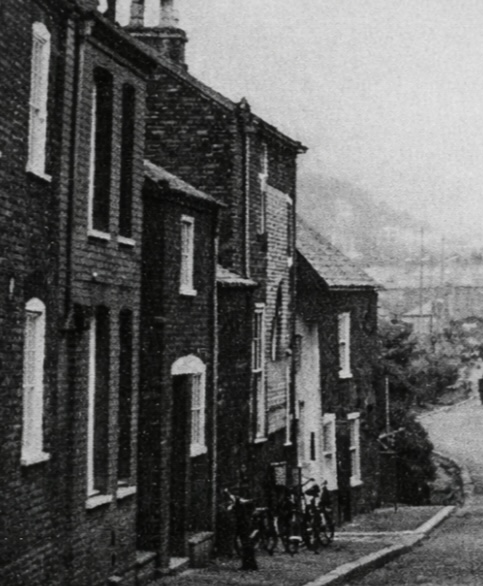
The demolished malt house displaying a large bottled beer advert painted on the wall.
Early Auctions and the Bingley Innkeepers
One of the first auction sales recorded at the inn was reported in the Leicester Journal on 15 February 1811, when Thomas Bingley was landlord. The sale was for twelve frames in use by local framework knitters.
The first recorded innkeepers are all Bingleys, a name synonymous with the village. They were:
- John Bingley (1753–1780)
- William Bingley (1766–1777)
- James Bingley (until 1781)
- Thomas Bingley (1781–1818)
- John Bingley (until 1825)
Their names were recorded by being carved into a beam above the bar.
The Mortimers (1841–1860s)
At the time of the 1841 census, William Mortimer (born 1811) and his wife Elizabeth (born 1801) were mine hosts. Both were born in Narborough.
They were still there in 1851, with William describing himself as a publican and grocer. At that time they employed Ann Laxton, aged 18, as a servant. She originated from Tugby.
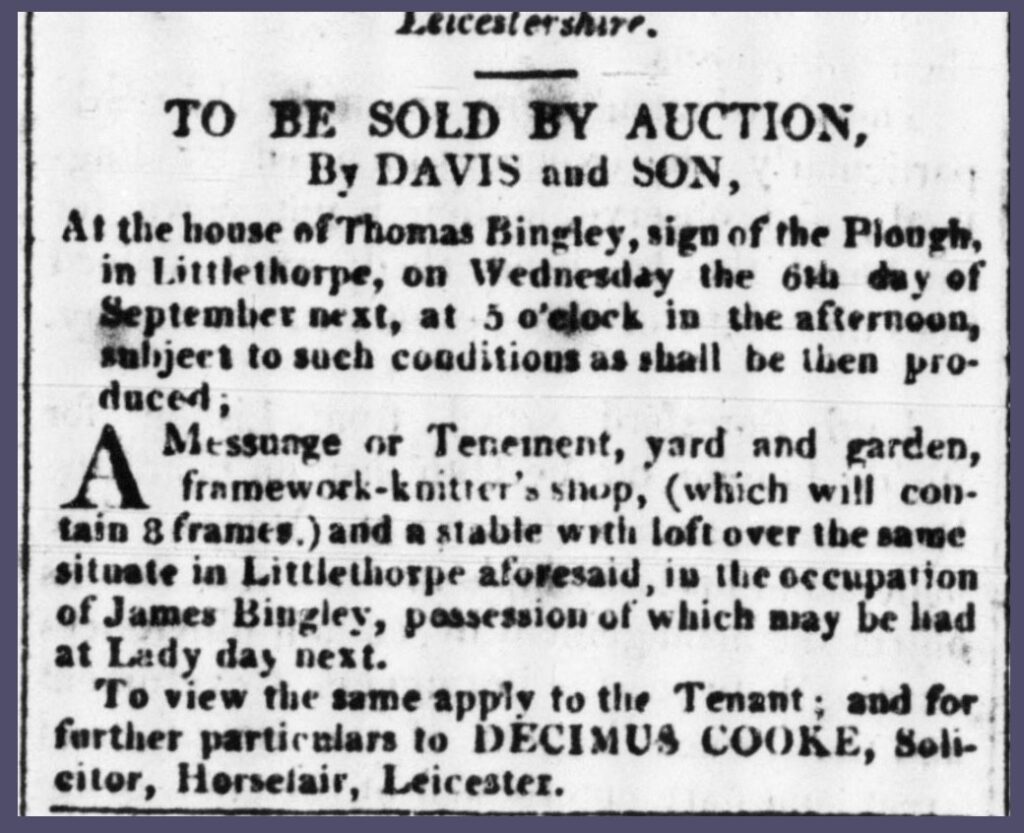
C.1800 century auction sale notice, when Thomas Bingley was the landlord.
By the 1861 census, Elizabeth was widowed and aged 63, describing herself as a victualler. She employed a 16-year-old servant, Elizabeth Essex, also from Narborough.
The Leicester Guardian of 12 November 1862 reported the theft of a side of bacon weighing ten pounds and worth 7s 6d (approximately £53 in 2026 values) from landlady Elizabeth Mortimer.
The Taylors (c.1870–1877)
Henry and Maria Taylor held the licence from around 1870 to 1877.
In the 1871 census, Henry (born 1820) described himself as an innkeeper and carpenter, and noted his birthplace as Croft. Their eldest son James (born 1856) was also a carpenter. They had four other children, all born in Huncote.
Also living with them was Elizabeth Underwood (born 1844), again from Huncote, possibly a servant or lodger.
John Wildbore and the 1885 Sale
John Wildbore (born 1805 in Littlethorpe) was innkeeper at the time of the 1881 census, along with his wife Fanny (born 1819), also from Littlethorpe.
The Leicester Journal dated 27 January 1885, on its front page, carried notice of an auction to take place at The Narborough Inn for the sale of the pub, then in the occupation of Mr John Wildbore. A later report dated 20 March 1885 recorded that bidding started at £500 and concluded at £755.
The Leicester Chronicle & Mercury of 16 May 1885 noted the transfer of the licence from John Wildbore to Joshua Willey. However, as far as I can establish, Willey is not listed as a landlord of The Plough.
Late Victorian Landlords
Frank Budworth is recorded there in 1887–1888.
By 1891, the landlord was Henry Pick (born 1841) and his wife Elizabeth (born 1839). They originated from Barkby and South Croxton respectively.
Also living there were:
- daughter Helena (a dressmaker)
- her husband Arthur Charlton (a quarry worker)
- son Henry (born 1868)
- daughter Maria (born 1870)
Henry senior described himself as an innkeeper and coal merchant, employing Henry junior in the coal business.
The Taplings (c.1897–1911)
From approximately 1897 to 1911, the landlord and landlady were Frederick Tapling (born 1873) and Maria Tapling (born 1870).
Frederick came from Bloxham, Oxfordshire, while Maria was a local girl from Desford. Their golden wedding was reported in the Leicester Mercury dated 13 July 1946. The article states they held the pub licence for sixteen years, which does not quite tally with the dates above, so which is correct I cannot be sure.
Frederick later worked at Empire Stone for 23 years.
The Biddles and the 20th Century
The Taplings were followed by Joseph and Emma Biddle in 1911. Interestingly, Joseph’s father James Biddle had kept the Joiners Arms in the Square until its licence was revoked in 1910.
The Biddles retired in 1934 and moved to 12 Station Road, opposite the pub.
Percy and Clarice Warburton followed for a period during the 1930s. They were still there at the time of the 1939 Register, though Percy described himself as a “hosiery machine operator”, and Clarice simply as “housewife”.
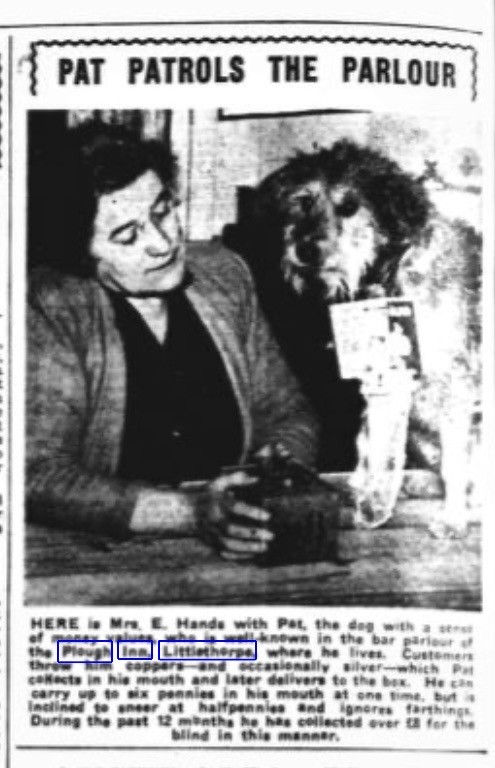
The Leicester Evening Mail dated 20th December 1949 carried this article about Mrs Hands and her “money dog”
The Hands and Later Years
Ernest Hands became landlord around 1947. The Leicester Evening Mail of 20 December 1949 featured an interesting article about Mrs Hands and her “money dog” (see picture). The Hands remained until 1958, when May Guerney took over. She had previously kept The Royal Hotel in Leicester, she remained until 1968 which is when the village began to be developed and my interest ends. Although ex Leicester City footballer Mike Stringfellow ran it in the late 1970’s.
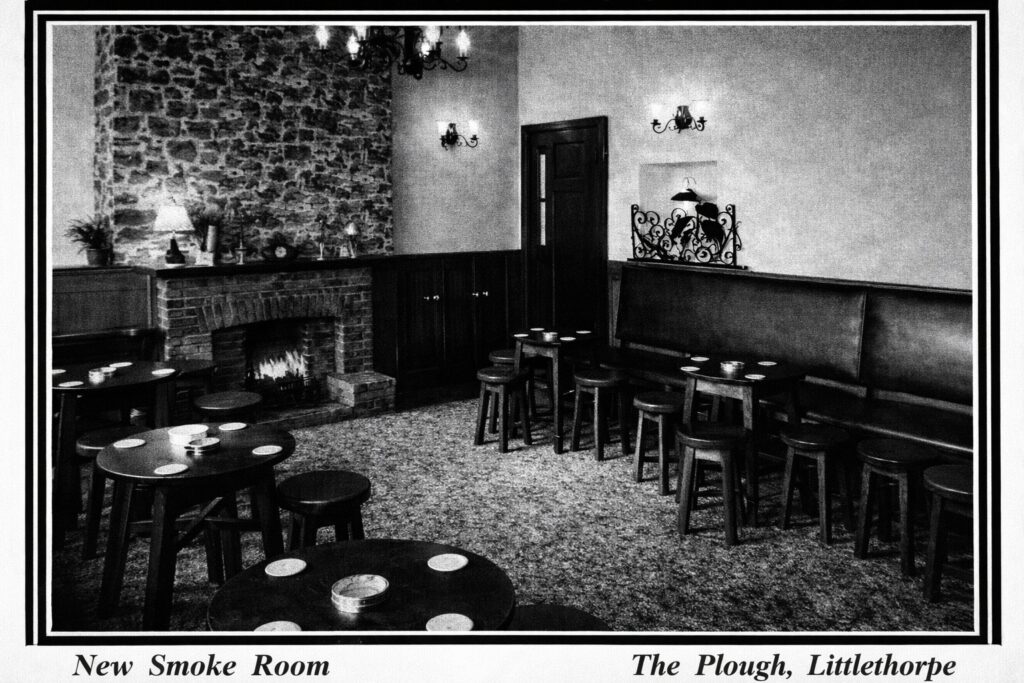
The Plough lounge revamped after May Guerney took over c.1960
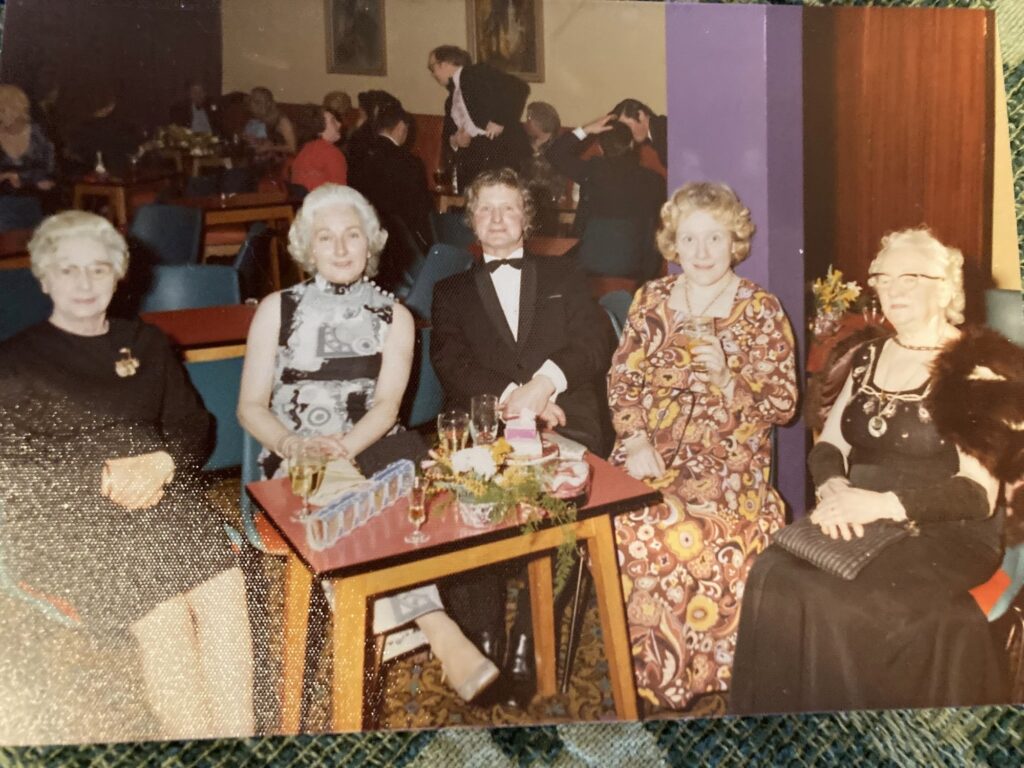
Some Plough regulars in the 1970’s. Left to right: unknown, Irene McReynolds, Roland Durrance, Barbara Durrance, and landlady Mat Guerney.
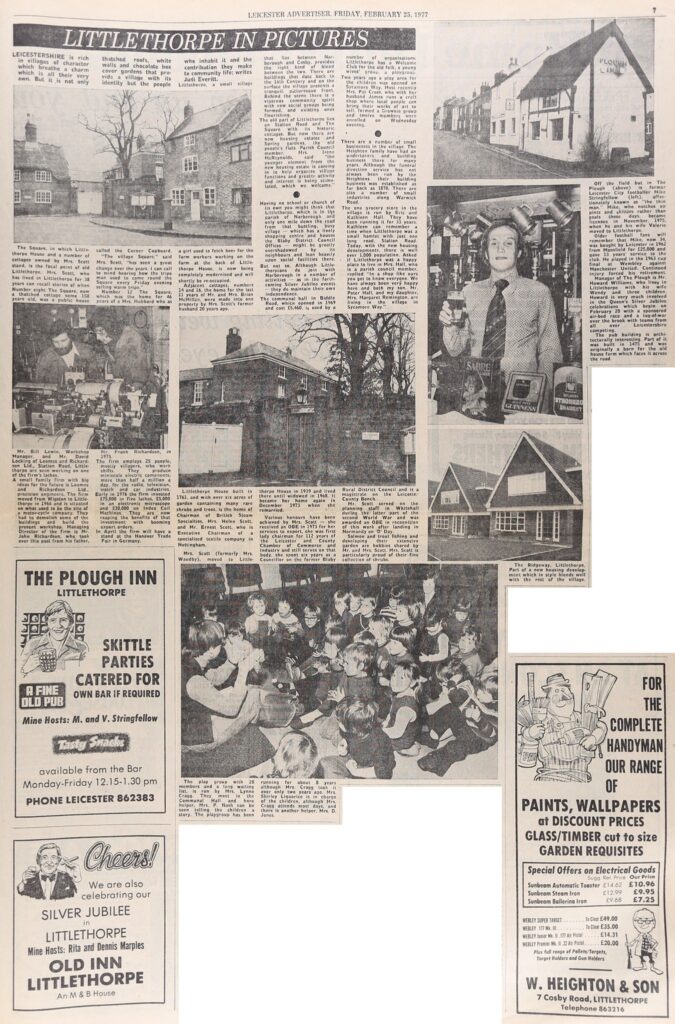
The Licester Advertiser 27th Febuary 1977 with ex footballer Peter Stringfellow as landlord.
Sources:
As with any local history research continues on this and more information will hopefully be added as it is found, so keep checking for the latest updates. In fact if you can add anything to the above please get in touch via the contact form