Let me introduce myself, Dave Thompson, I grew up in the village in the 1950’s and 60’s. Back then it consisted of just Station Road, Wide Lane, The Square, The Narrows, Cosby Road, and Warwick Road. I loved being a Littlethorpe lad, which led to this full research and website beginning in the autumn of 2025
Littlethorpe lies south of its larger neighbour Narborough in south Leicestershire. It is approached from there by first crossing the Leicester to Birmingham railway crossing adjacent to the station in Narborough, this has been there since 1864. What a change this must have been for both villages, not only in terms of landscape but socially quite dramatic, probably equal to the effect that social media has had today.
The river soar was then crossed by two quite attractive brick built bridges with stone cappings.
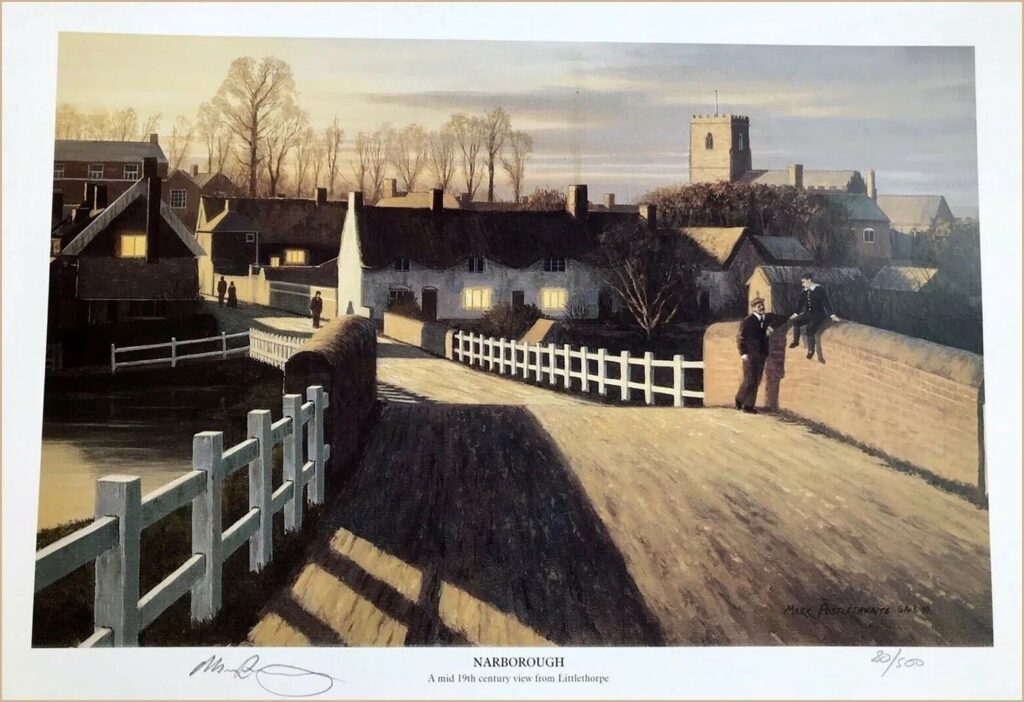
The 1788 bridge over the river Soar. Before the railway came.
These were built by public subscription in 1788. (Unfortunately they were demolished and the road widened in 1972) The road then dropped slightly to enter Littlethorpe village, along the left hand side were raised wooden (later concrete) flood planks as the Soar was quite susceptible to flooding at this point.
By the side of the river were osier beds providing seasonal income for some of the villagers, in fact across to the right, on the edge of the village was a small barn known as osier barn, this where the osiers would have been stored to dry.
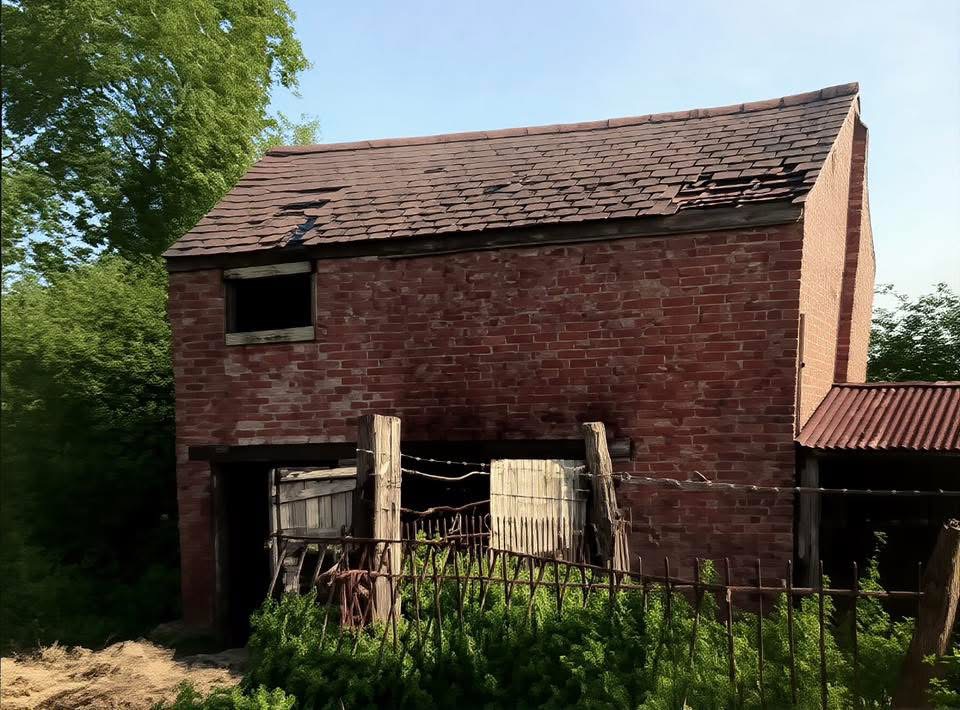
The Osier Barn before demolition.
The field to the left of the flood planks was known as Biddles Meadow, the name Biddle being well known in the village as carpenters and innkeeper’s of both the Joiners Arms and the Plough Inn, although anot at the same time.
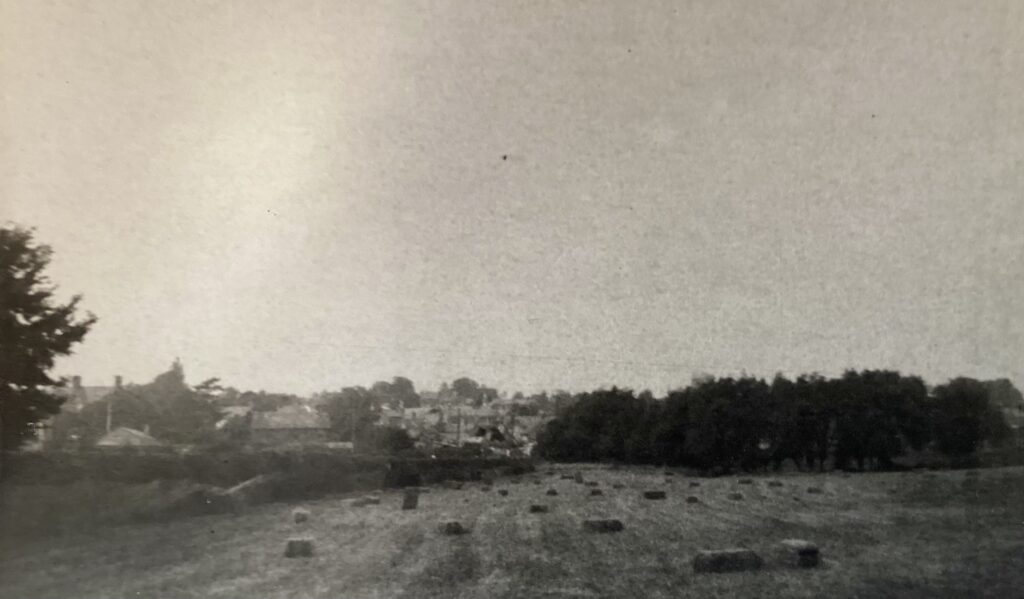
Biddles Meadow after haymaking in the early 1960’s.
Before later 20th century developments the first house we came to on the left hand side was number 10 Station Road, this where my family moved to in 1951 when I was hthree years old and it remained my home for the next eighteen years.
Hence this history, it’s were I grew up, played in its fields and fished in the river. I remember some of the local people that had lived there for many years, what they did and where they worked, the village shops of which there were two, a couple of butchers, two pubs, three farms, a market garden, a transport firm, council depot, coach business, turf suppliers, builders, carpenters (complete with their own small timber yard), painters and decorators, two factories producing diverse things such as ladies nylons and wire brushes, a motor repair garage, plumbers, etc. all in a small hamlet, even as I write it I can’t quite believe the sheer number and variety for such a small place.
In the early 19th century by far the biggest occupation was that of stocking framework knitters with agriculture following a long way behind. Shocking to see children in employment from the age of six or seven in both of the above.
Later in the 19th century we see mechanisation take over, Littlethorpe even produced motor cycle engines!
So plenty to research and record and something that can never be complete.