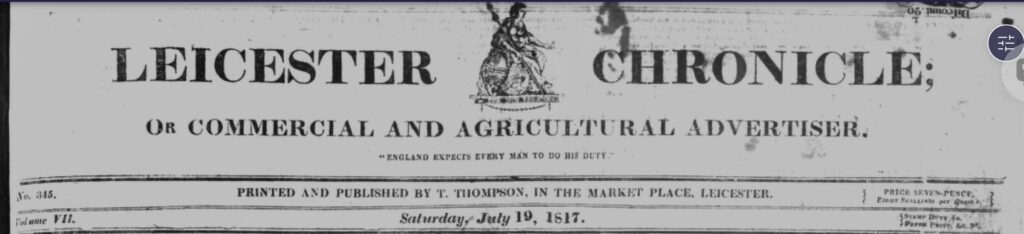
Over time we’ll try and read what we can of Littlethorpe village history from old newspaper reports and articles. The page will grow as the research continues.
A Marital Dispute in Littlethorpe
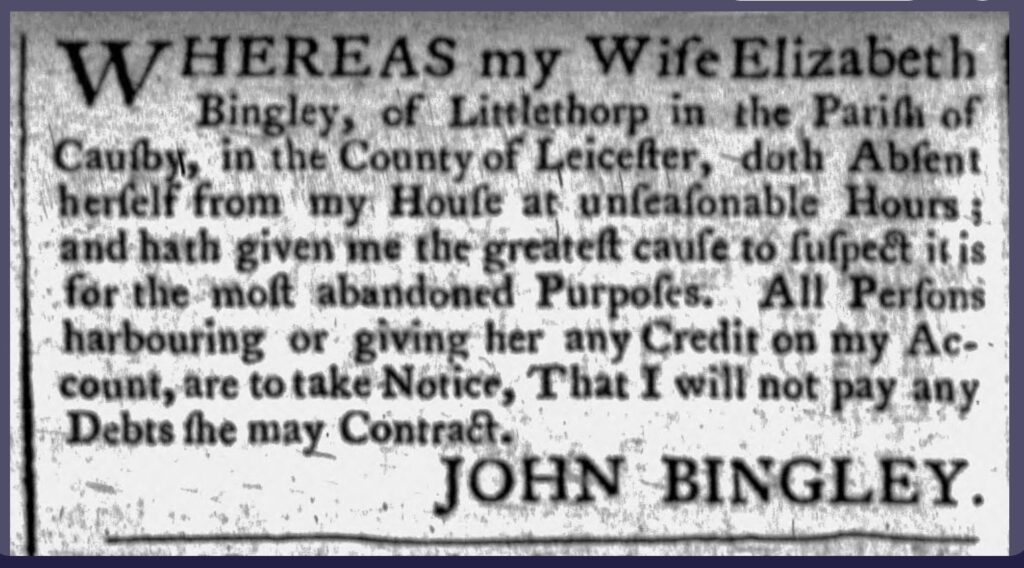
From The Leicester Journal 9th November 1765
Several things to notice in terms of spelling. No ‘e’ at the end of Littlethorpe, the use of ‘f’, which is actually the old long version of ‘s’.
Heres a glimpse into 18th century life in the village, concerning John Bingley and his wife, Elizabeth. John describes that she had been absent from his house “at unreasonable hours”. He went on to say that this had given him “the greatest cause to suspect” that she was being absent for “the most abandoned purposes” (draw your own conclusions from that!)
The notice then issued a warning to anyone who might provide Elizabeth with goods or credit. John stated that he would not be responsible for any debts she might incur.
You wonder whether or not this notice had any effect other than John making his feelings known, after all how many people of consequence would even see this, let alone be able to read it, I suspect village gossip would have its own effect though.
Littlethorpe’s Runaway Apprentice
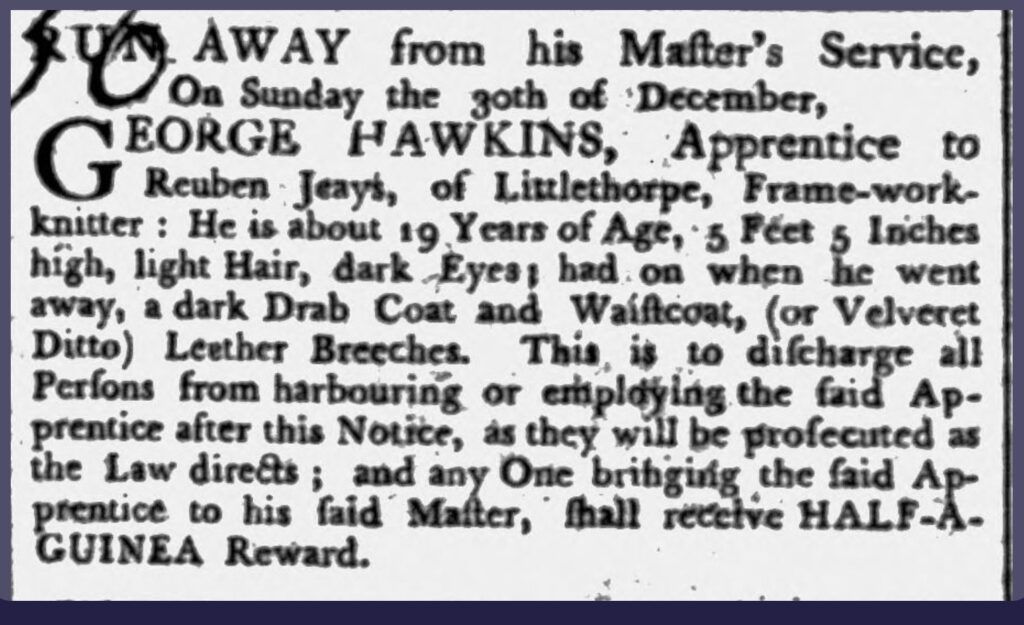
From The Leicester Journal 28th December 1792
Printers still using the long ‘S’.
George Hawkins was about 19 years old, and apprenticed to Reuben Jeay, one of the Littethorpe framework knitters. On Sunday 30th December (odd that the article is dated two days before but we go with the facts presented to us) 1792, George apparently decided that he had enough of his apprenticeship, or maybe Reuben, and “went away from his masters service”.
What makes the notice particularly interesting is that George is described as though the authorities wanted him recognised in the street:- about 19 years old, 5 feet 5 inches tall, light hair, dark eyes, wearing a drab coat and waistcoat, leather breeches, and intriguingly, a note about velvet clothing.
This is not the missing person appeal we would see today, the advertisement explicitly states that anyone harbouring or employing him would be prosecuted, while anyone returning him would get a half-guinea (52.1/2p) reward.
What happened to George, did he run far away or did he stay local? Was he found and returned to his master? What happened to Reuben Jeay, did he find another apprentice? We may never know because as with everything the research continues.
A New House for Sale in Littlethorpe, 1792
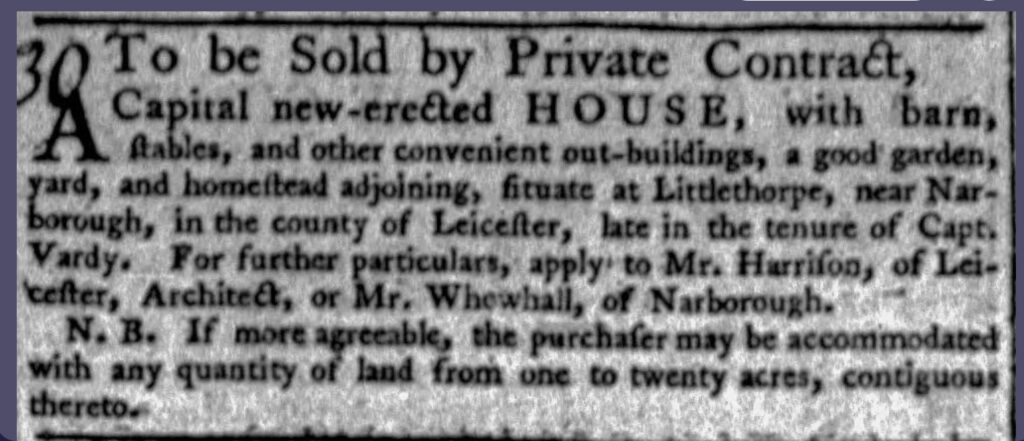
From The Leicester Journal of March 2nd 1792
In 1792 a newly built house was being offered for sale in the village. It was far more than the ordinary village cottage. It came with a barn, stables and other unspecified outbuildings, together with a good garden, yard and homestead (farm) adjoining. This was a house with sufficient land and buildings to support a substantial household, as well as agriculural or other commercial activity.
From the above description I can only tie it to just one place in Littlethorpe, my childhood home 10 Station Road, the outbuildings description matches well, as does my earlier date estimate, and I can think of no similar situation in the village.
There is another intriguing detail, the property was “late in the tenure of Capt. Vardy”. This suggests that Captain Vardy had recently occupied the property. Currently I can finfd no more information on him. The advert suggests the involvement of an architect, Mr Harrison of Leicester but we don’t know the exact connection. The purchaser also had the option to buy “any quantity of land from one to twenty acres contiguous thereto”
The questions unanswered,
- Who built it, or had it built, Captain Vardy maybe?
- Who was Mr Harrison the Leicester architect?
- Who was Mr Whewhall of Narborough?
- Is this what we now know as 10 Station Road?