Architectural history Late 18th-century construction: The house was built in 1761 and is a prime example of the architectural styles of that era. Purple slate roof: The house features a distinctive purple slate roof, which is a key characteristic of the building.19th-century additions: A central glazed door was added in the 19th century, which is a notable addition to the original structure. Possible older elements: Some parts of the house may incorporate older elements, but there is no specific information about the earlier structures.
Notable featuresTwo-story design: The house has two stories with attics, typical of late 18th-century residential architecture. Glazed windows: The house features glazed windows, including sashes with glazing bars on the first floor, adding to its historical charm.Service wing: The house has a service wing with two bays, including a glazed door and four-pane sashes, which indicates a functional design. Paired wooden gutter brackets: The house has paired wooden gutter brackets, which is a common feature of 18th-century homes. Brick end stacks: The house has brick end stacks that are integrated into the design and structure.
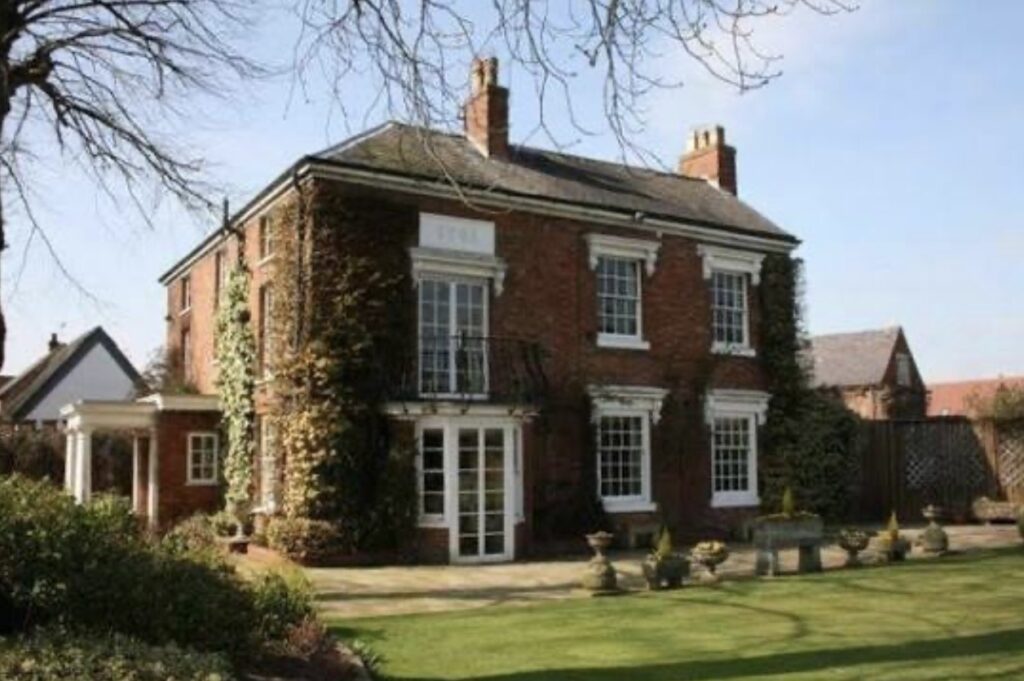
Littlethorpe House dates from C.1761
During my time in the village this was owned by John & Helen Waudby and looked upon almost as the village squire and his wife. They also owned Littlethorpe house farm at 16 Station Road, numerous other cottages, one of the last village “yards”, one of which my brother was once a tenant of, as well as acres of farm land around the village. Memories of their chauffeur driven Rolls-Royce gliding along Station Road.
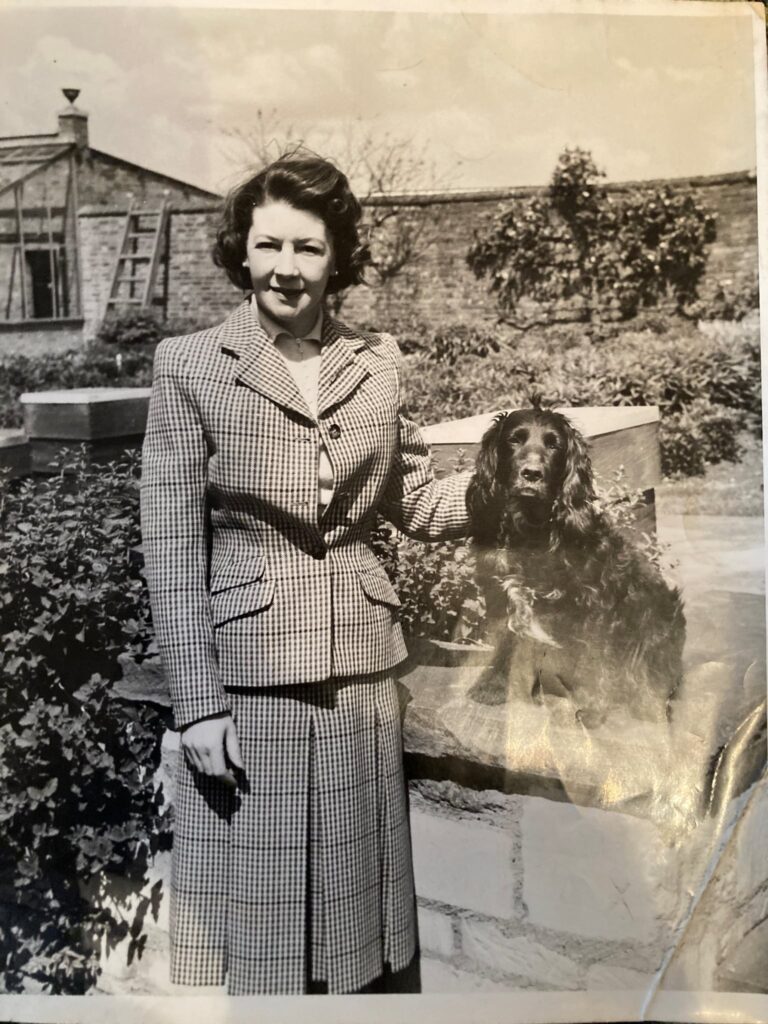
Helen Waudby in C.1962
The earliest resident traced so far is Edward Dudley Hudson, a surgeon. He was there at the time of the 1841 and 1851 census returns, he died in October 1851 aged 53, and in the following February the house was put up for auction by his widow Mary.
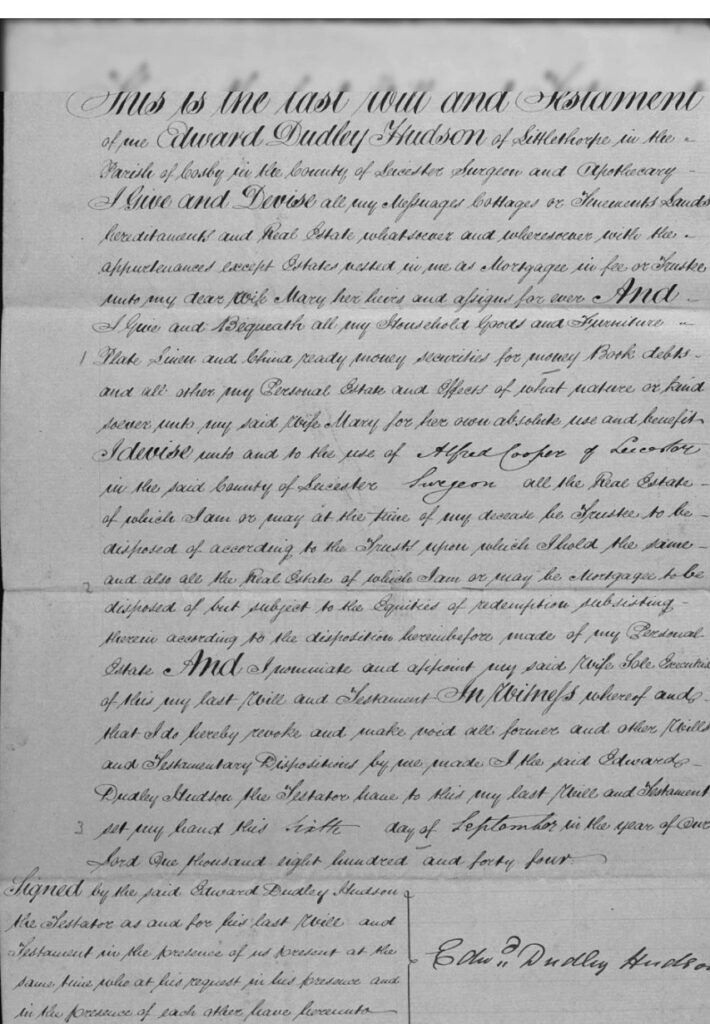
Edward Dudley-Hudson Will
It would seem that the house was purchased by Thomas Willey, another surgeon, he died in March 1865 aged just 44 leaving a widow Mary. The Leicester Journal of Friday 16th September 1881 carries two auction notices by H & F Tarratt for the sale of the house and five acres of pasture land to take place on 7th October, this is a result of Mary’s death. The following day there was to be a sale of the complete household contents. The clippin gs for these sales can be seen left. The house was sold for £805 (equivalent value at 2026 £130,000). The land fetched £110 per acre.
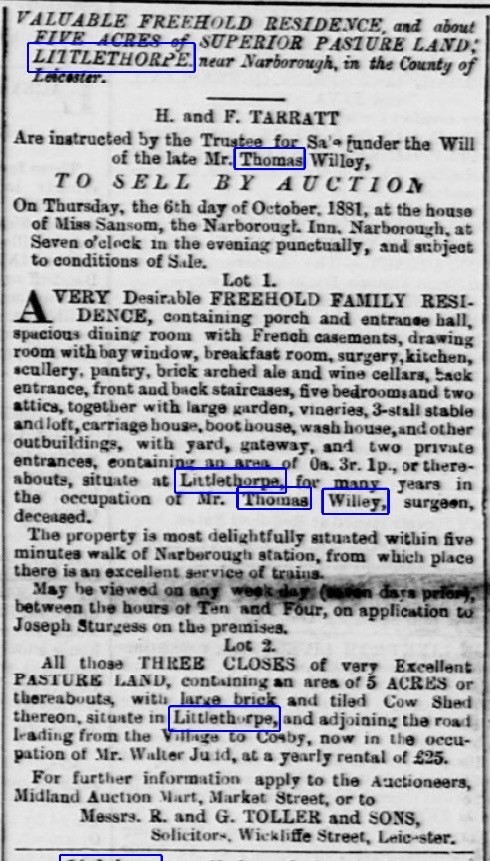
1881 auction sale notcie
The occupier at the time of the 1891 census was Issac D. Bloom age 48. Issac according to the previous census he was at the same address and identified as Mary Willeys son in law. ( I can’t reconcile this at the moment because the house was reportedly sold in 1881, so was Issac the purchaser for £805 at the sale in 1881?) He employed a housekeeper, Priscilla White.
W.O. Dawson house and estate agent of Crown Chambers, Loseby Lane, Leicester advertised in The Leicester Mercury of 26th August 1899 the house to let for a rent of £50. It seems they had been trying to let it since 1896. Still adveraised 1901, 1902, 1910.
The Leicester Chronicle of July 22nd 1911 carries a report of “a pleasing little ceremony in connection with the coronation (George V), in the old fashioned garden of the Rev. H. Parker, of Littlethorpe House, when 96 children of Littlethorpe received coronation mugs”.
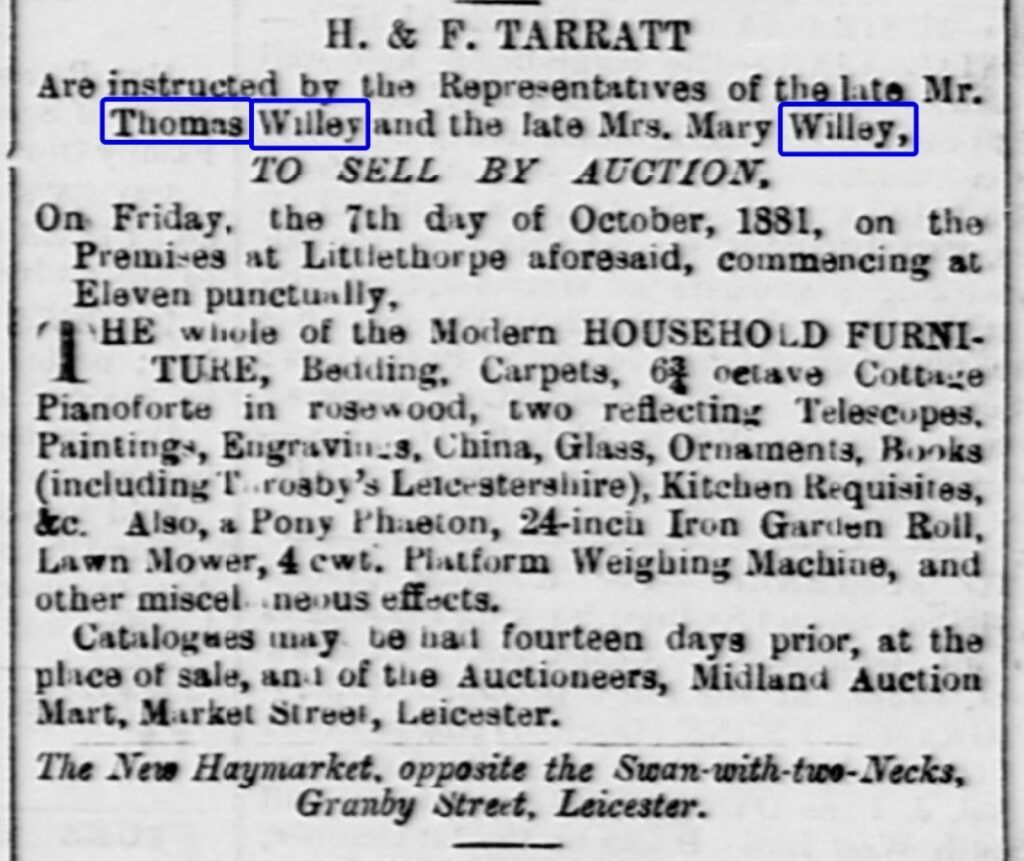
Mrs Mary Willey contents sale notice 1881.
The 1921 census return shows shoe merchant and commercial agent, John Berry in residence with wife Maude, daughter Ruby, and cook Kate Brewin. March 1922 and Mrs Berry of Littlethorpe House is advertising for “a good cook general, also housemai, three in family”. May 1924 and Mrs Berry is again seeking to employ “a good general“ servant. The Leicester Mail dated 12th November 1926 carries a tragic story concerning one of the servants Sarah Ellen Dumelow, the clipping can be seen below.
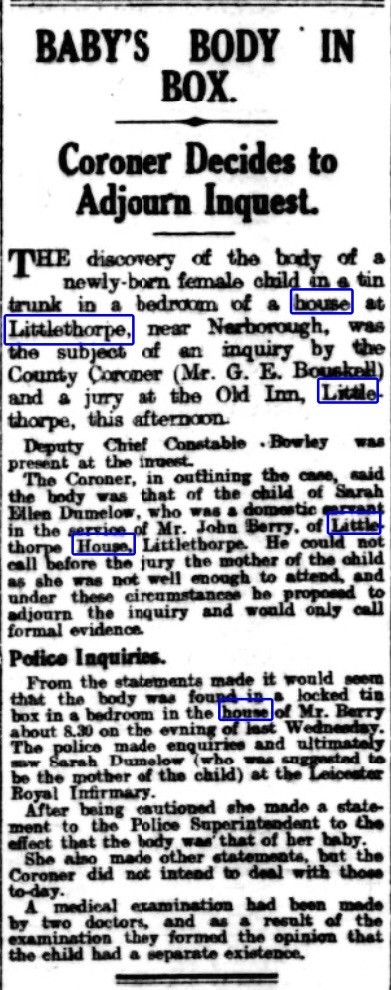
The Leicester Mail dated 12th November 1926
1936 and the funeral of Mr John Berry, leather merchant takes place at Narborough. In June of that year the house was up for sale with Warner, Shepherd & Wade offering “an attractive, compact, old-world residence in a delightfully arranged garden, the whole well seclude; garage and tennis lawn”. It was taken on by Dr John Francis Dixon and his wife, Dixon was the ex head of the City Mental Health Hospital in Humberstone, unfortunately he died in November 1937. The Leicester Mercury of 18th February 1938 reports the details of his estate of £9700, it can be seen pictured left.
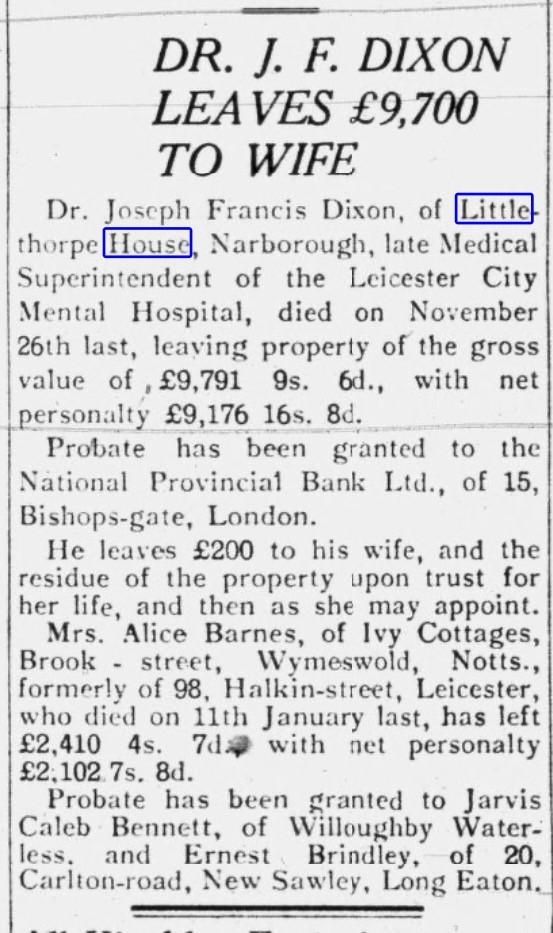
Will of Joesph Francis Dixo
The house was then bought by John Walter Waudby, director of British Steam Specialities, and his wife Helen.
Sources:
As with any local history research continues on this and more information will hopefully be added as it is found, so keep checking for the latest updates. In fact if you can add anything to the above please get in touch via the contact form